


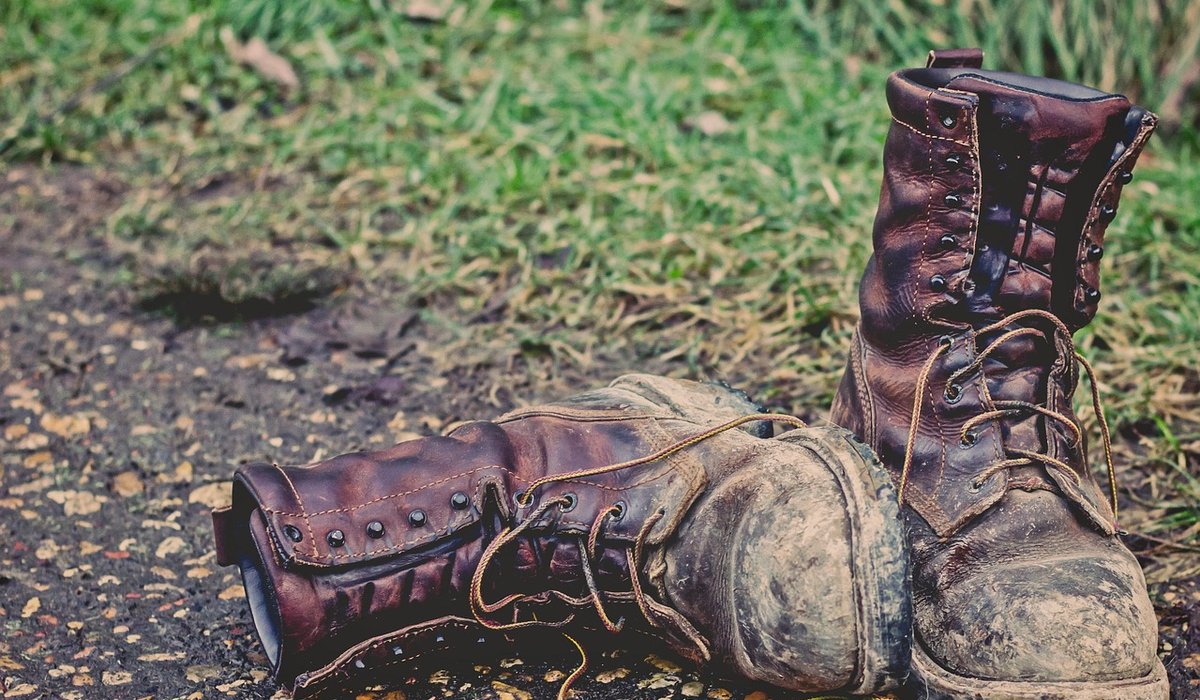
There is a particular kind of wetness in the British hills. It is not the clean soak of a downpour, but the slow, creeping saturation of peat bogs, tussock grass and sheep-cropped slopes that hold water like a sponge. Good boots will not make you waterproof, but they will keep your feet warm, stable and dry enough to enjoy a long day out. Here is what actually matters when you are choosing them.
Waterproofing: Membranes, Leather and the Reality of Wet Grass
Most walkers think about waterproofing first, and it is worth understanding what you are buying. A waterproof membrane sits inside the boot, usually as a bootie, and stops water getting in from outside while letting some vapour escape. Full-grain leather uppers can be treated with wax or oil to shed water on their own, and they tend to be more abrasion-resistant on rocky ground.
What matters most in practice is the height of the boot and how the tongue is constructed. A deep, gusseted tongue that folds up inside the boot keeps bog water out far better than one that simply sits behind the laces. If you regularly cross peat hags in the Pennines or splash through Cumbrian becks, look for:
- A gusset that reaches at least to the top of the lacing
- A rand — the rubber strip around the lower edge — that wraps high at the toe
- Fewer seams in the lower half of the boot, as seams are where water wins
- Ankle height that clears the worst of the mud and heather
Fit Comes First: Heel Hold and Toe Room
You can buy the most technical boot on the shelf and it will still ruin your day if it does not fit. Fit beats features every time. The classic test is the heel hold: lace the boot up properly, then try to lift your heel while pressing the toe down on a step. If your heel slides more than a few millimetres, you will get blisters on any real ascent, and no amount of sock layering will fix it.
At the other end, you need room in front of your toes. On long descents your foot slides forward, and if your toes are jammed against the front you will lose toenails. Aim for roughly a thumb's width between your longest toe and the boot's front, measured with your heel firmly back in the heel cup. Try boots on in the afternoon, when feet are slightly swollen, and wear the socks you actually walk in.
Grip and Tread: Reading the Sole
Wet rock, greasy slabs and slick wooden footbridges are where grip is tested. Two things matter: the rubber compound and the tread pattern. Softer rubber grips better on wet rock but wears faster on abrasive gritstone paths. Harder rubber lasts longer but can skitter on slimy Lakeland slate.
For general fell walking, look for a sole with deep, widely spaced lugs — around four to five millimetres — that clear mud rather than clogging. A defined heel brake helps enormously on steep grass descents. Under the ball of the foot, a flatter, smoother zone gives more rubber contact on rock, which is why many good fell boots combine both. If you plan to scramble, you want a slightly stiffer sole with an edge you can trust on small holds.
Breathability: Keeping Feet Dry from the Inside
Most people's boots are wetter from sweat than from rain. A waterproof membrane is only half the story; the upper has to let vapour out. Leather boots breathe reasonably well once broken in, but they need regular cleaning to keep the pores open. Synthetic uppers are lighter and dry faster, though they can feel clammy over long days.
Manage moisture with what you wear. A thin liner sock under a cushioned wool-blend sock wicks sweat away and reduces friction. Avoid cotton entirely. On multi-day trips, take spare socks and consider drying damp ones against your body inside your sleeping bag overnight — an old trick that works surprisingly well.
Weight, Stiffness and the Ground Underfoot
Boots sit on a spectrum from flexible trail shoes to stiff mountaineering boots. For boggy paths and rocky descents, a mid-weight three-season boot is the sweet spot for most British walkers. It should bend at the ball of the foot when you push off, but resist twisting when you grab the boot at heel and toe and wring it.
Stiffness underfoot protects your feet from sharp stones on long descents, but too much stiffness feels clumsy on undulating, rooty paths. If you carry a heavy pack for wild camping, lean stiffer and higher-cut for ankle support on tired legs. If your load is light, a more flexible boot will keep you fresher.
Buying, Breaking In and Looking After Them
Buy boots from a shop where staff will measure your feet and let you walk around for twenty minutes. Take your own socks, try several models back to back, and trust the fit over the colour or the price.
- Break boots in gradually: short local walks first, then a low fell before a big day
- Clean mud off after every trip, as grit grinds away at stitching and membranes
- Reproof leather regularly with wax or oil, and use a gentle cleaner on synthetics
- Dry boots slowly at room temperature, never on a radiator or by a fire
Look after them and a good pair will carry you through many wet, wonderful seasons on the hills.


Leave a reply