


Why the Midweek Fell Is a Different Place
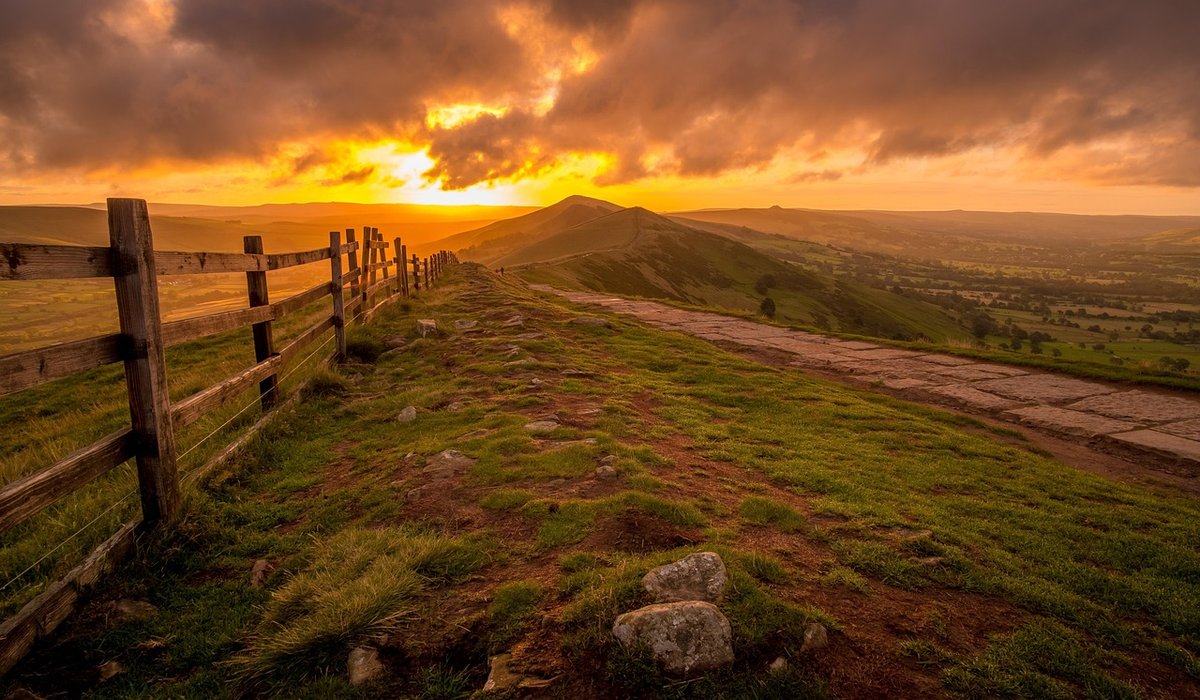
There is a particular quality to a Lakeland or Snowdonian hillside on a Tuesday morning in late autumn. The car park at the foot of the track holds two vehicles, not forty. The path, usually worn into a broad ribbon of grit and boot prints by August, narrows back to something more like a suggestion. You can hear your own breathing, the tick of a walking pole, and the wind moving through grass that has not been trampled flat.
Most hill-goers experience the fells on weekends. That means queues at stiles, a slow procession up the zigzags, and the mild social pressure of being surrounded by people who all seem to know exactly where they are going. Midweek walking strips that away. It is not simply quieter; it is a different relationship with the ground under your feet.
The Attention Restorer
Desk work and town living are, for many of us, an exercise in directed attention. We hold focus on screens, on conversations, on the low hum of traffic and notifications. That kind of concentration is finite. Spend long enough in it and you feel the edges fray: irritability, a foggy head, the sense that you have been busy for a fortnight and cannot remember a single thing you actually did.
Natural environments ask for a softer kind of attention. You still need to watch your footing, but the rest of your awareness is free to drift. The result, well documented in environmental psychology, is a measurable recovery in mood and concentration. The fells are particularly good at this because they demand just enough of you to keep you present without overwhelming you.
- Vary your pace and let your gaze range to the horizon rather than the next metre of path.
- Leave the headphones at home for the first hour. Birdsong, water and wind are the point.
- Stop properly, not just to catch your breath. Sit down, take the pack off, and stay for ten minutes.
Choosing Less Familiar Routes
There is nothing wrong with the classic rounds, but midweek is your chance to walk something that does not have a well-known name. Pick a hill that appears on the map with an unglamorous contour and no entry in the guidebooks. Study the rights of way, the access land boundaries and the contours carefully before you go, and be honest about your navigation.
Less familiar ground changes your experience in ways that are hard to fake. You read the map rather than follow the crowd. You notice the transitions: the point where sheep-cropped turf gives way to heather, the sudden terraces of old quarry spoil, the way a beck cuts a small ravine behind a shoulder you had not expected.
Practical notes for an unfamiliar route:
- Carry a paper map and a compass, plus a spare battery for your phone or a separate GPS unit.
- Check access land and any seasonal restrictions before you set off, and respect stiles, gates and drystone walls.
- Plan a route that is shorter than your weekend ambition. Solitude rewards unhurried walking.
- Tell someone your route and expected return time, especially midweek when fewer people are about.
Wild Camping as an Extension of the Day
Wild camping in England and Wales is not a blanket right; in most of the uplands it requires the landowner's permission, though in practice many hill areas tolerate a single, small, low-impact pitch for one night. Scotland is far more permissive under the Land Reform (Scotland) Act, provided you follow the outdoor access code. Know the rules for the ground you are on and pitch accordingly.
The reward is the long evening. Camping high means you stay for the light, the midges go quiet, and the valley fills with a slow blue shadow while you boil water for tea. You get the two hours most day-walkers never see: the hour when the day's walkers have gone and the hour when the night is not yet complete.
Keep it light and keep it invisible:
- Pitch late, leave early, and choose ground that will recover overnight.
- Use a small, low-profile tent in muted colours and avoid the same spot more than once.
- Take everything out with you. Bury human waste at least 30 metres from water and 15 centimetres deep, and carry out the paper.
- Cook on a stove rather than an open fire, and never on peat or dry moorland.
- Check the mountain weather forecast and be prepared to bail out to a lower pitch or a bothy.
Small Rituals for a Better Day Out
The benefits of a quiet fell walk accumulate through repetition more than through one heroic outing. A few small habits help.
Start early enough that you are on the first rise before the day's admin has a chance to find you. Eat something proper at the top rather than a flapjack at a stile. Take a notebook and write three lines about what you noticed: the colour of the light, the sound of a bird, the shape of the cloud sitting on the next ridge. On the drive home, do not listen to the news.
Most of all, resist the urge to turn the walk into a project. The point of a midweek fell day is not a strava segment or a summit tick. It is the quiet accumulation of hours outdoors, the slow return of your own attention, and the feeling — usually arriving somewhere on the descent — that the week has stopped pressing on your shoulders. That is the whole of it, and it is enough.


Leave a reply