


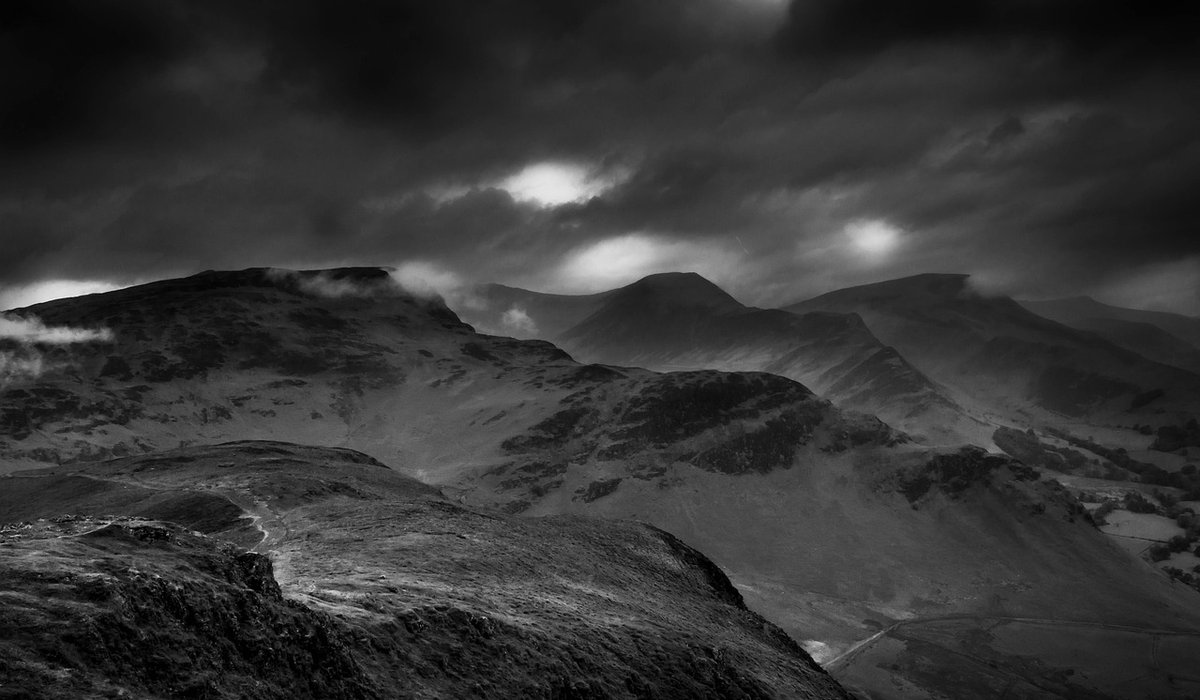
Why the fells look better in soft light
Hard midday sun on an open fellside is rarely kind. Shadows shorten, contrast runs away from you, and the subtle greys and greens that give British uplands their character flatten into something closer to a postcard. Soft light — mist, high cloud, the twenty minutes either side of sunrise — does the opposite. It wraps around the land, reveals the grain of wet rock, holds detail in the darkest crags and lets a distant ridge separate itself from the one behind. The good news is that soft light is the default state of the British hills for much of the year. You don't need to chase perfection; you need to recognise it when it arrives.
Better still, it suits the way most of us actually walk: slowly, stopping often, sitting still long enough for the light to change. That rhythm is good for the pictures and good for you.
Choosing your window before you leave the house
Soft light is mostly a scheduling problem. A few things worth checking the night before:
- Wind direction and speed. Calm, clear nights in autumn and early spring often give valley mist by dawn. Strong wind usually clears it, but brings fast-moving cloud and dappled light instead.
- Temperature and humidity. Air close to its dew point is your friend. If it's damp and the night is still, expect something interesting in the hollows.
- Sunrise, sunset and civil twilight. The blue hour before sunrise is often better than the pink one. Be on the fell 45 minutes early — that's when the colour arrives, not when the sun does.
- Time of year. In the Lake District in June, first light comes around half four and the campsite will still be asleep. In December you can walk up in daylight and still catch the afternoon glow.
Build in a buffer. An hour of margin either side of your planned shoot costs nothing and buys you everything.
Kit that is genuinely enough
You do not need a full-frame body and a bag of primes. You need something you'll actually carry up a hill in the rain.
- One camera, two lenses at most. A wide zoom for ridges and scale, and a short telephoto for isolating mist layers, cloud shadows and distant summits.
- A light tripod, or a trekking pole with a camera mount. Useful at dawn when shutter speeds drop, but only if it doesn't become a reason to leave the camera at home.
- A microfibre cloth and a lens hood. Mist means moisture on the front element. Wipe, don't scrub.
- Spare batteries kept warm. Inside a jacket pocket, not the rucksack lid. Cold cells die fast on a summit.
If all you have is a phone, use it. Modern phone cameras handle soft, low-contrast light very well, and the discipline of a single fixed lens will teach you more about composition than any upgrade.
Working the mist
Mist is not a problem to be waited out; it is the subject. Look for separation: a dark ridge behind two paler ones, a lone tree on a spur, a wall running into nothing. The further away something is, the paler it should be, and that layering does the work for you.
Exposure is where most people go wrong. Mist is bright, and the camera will try to make it grey. Add roughly one to one-and-a-half stops of exposure compensation and check the histogram — you want the brightest mist sitting high on the right without clipping. Shooting raw gives you room to pull it back later.
Don't pack up the moment the mist starts to lift. That five minutes when the sun first punches through, and everything goes from flat to luminous, is worth standing in the cold for.
Cloud shadows and dawn colour
Broken cloud cover at dawn is the gift that keeps giving. Patches of sunlight slide across the fellside, and you can simply wait for the light to land where you want it. Pick your composition first, then let the light come to you rather than chasing it.
Watch for cloud shadows — great soft-edged shapes moving across a whole valley — and use a telephoto to compress them against a sunlit ridge. On colour, resist pushing saturation in camera. Keep white balance neutral and let the warmth of the light do the talking. If you shoot JPEG, easing the contrast setting down slightly preserves the delicacy that makes dawn worth the early start.
Fieldcraft, camping and coming home
If you're wild camping, remember that it's legal in Scotland under responsible access rules, but generally isn't in England and Wales without the landowner's permission. Camp low and late, leave early, use a stove rather than a fire, carry everything out and keep groups small. That isn't just etiquette — it's what keeps quiet places quiet.
There's a wellbeing argument here that's easy to miss while you're fiddling with settings. Standing still for twenty minutes in cold mist, waiting for a shadow to move, is a form of attention few of us get anywhere else. The photograph is a by-product. The slowing down is the point.


Leave a reply