


Why the quiet spots stay quiet
Most fell walkers eat lunch within sight of their car. It is not laziness so much as habit. The bench at the reservoir, the flat rock by the gate, the picnic table with the litter bin and the view of the car park: they are easy, they are known, and they ask nothing of you. Yet the lunches you actually remember happen two hundred metres off the path, tucked behind a boulder, with the wind hissing over your head and a view nobody else has bothered to walk to.
Finding those places is a skill, and like most hill skills it is mostly about reading the ground. It costs you perhaps twenty minutes of extra walking and a little planning, and it turns a functional sandwich stop into the best hour of the day.
Reading the land before you leave the house
Quiet lunch spots are visible on a map long before you see them. Use a 1:25,000 sheet and look for the following, in roughly this order of importance:
- Shelter from the prevailing wind. In Britain that usually means the east or south-east side of a ridge, crag or knoll. A spot in the lee can feel ten degrees warmer than one fifty metres away on the windward side.
- Contour detail. Tight bunches of lines mean steep ground and therefore crags, gullies and broken rock—exactly where little flat platforms hide.
- Water. Blue lines on the map mean streams, and streams mean small green clearings, gravel spits and shingle banks, usually where the ground flattens as a beck meets a path.
- Ha-has, hauses and cols. A dip between two tops funnels the wind, but the immediate lee of the saddle often holds a sheltered pocket.
- Walls and enclosures. Old sheep folds, ruined drystone walls and the odd abandoned building are marked clearly and are usually built in sensible, sheltered places. Our ancestors knew a good spot when they found one.
Mark two or three candidates on your route before you set off. One may be waterlogged, one may be occupied, and one may simply not feel right when you get there.
Sheltered outcrops: the windbreak you don't have to carry
Gritstone edges, limestone scars, granite tors and volcanic crags all do the same job: they break the wind and radiate a little warmth if the sun has been on them. The trick is to look for a corner—a right angle of rock, or a boulder with a natural bench beside it.
Approach from downwind and you will often find the whole character of the place changes. On a day when the wind is pushing thirty miles an hour across the top, the lee side of a decent outcrop can be shirtsleeve weather. Sit with the rock at your back and shoulder, not directly behind your head, so you can still see out. Avoid sitting directly under overhanging rock on a wet day or after frost, and keep clear of anything that looks recently fallen.
Carry a small foam sit mat or a folded piece of closed-cell mat. Cold ground pulls heat out of you far faster than cold air, and a twenty-minute stop with a cold backside ruins the rest of the walk.
Streamside clearings and old sheep folds
Upland becks are excellent company. Find a spot where the stream bends, where a gravel bank has built up, or where a small waterfall has scoured out a flat shelf. The sound of moving water masks traffic and other walkers, and these spots are usually greener and more sheltered than the surrounding moor.
Sheep folds are the unsung heroes of quiet lunches. A ruined fold gives you three walls, a stone floor that drains, and a doorway facing whichever way the flock needed it. They are marked on maps as small rectangles, often with the word "sheepfold" or a tiny black shape. Sit inside, use the wall as a backrest, and enjoy the strange, solid feeling of a place built for exactly this purpose.
Two practical notes. Treat all water from upland streams—filter it or boil it, because there is almost nowhere in the British hills that has not had sheep above it. And never camp or linger inside a fold that is still in use, with fresh droppings or a gate that closes.
Wild camping nearby, done lightly
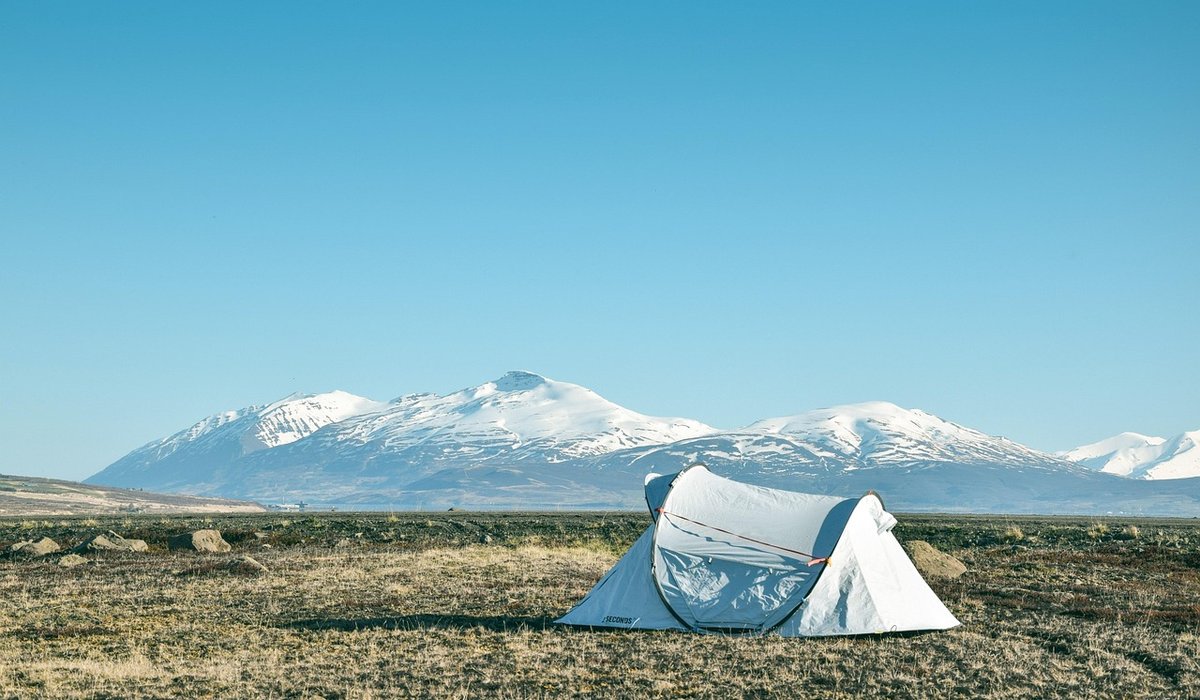
If your lunch spot is good enough that you would rather not leave, wild camping is the obvious next step. In Scotland, wild camping on unenclosed land is a right under access legislation, provided you follow the guidance: small numbers, no fires, leave no trace. In England and Wales, it is not a general right; camp high, discreetly, well away from roads, houses and enclosed farmland, arrive late and leave early, and where possible ask permission. Some national parks tolerate it above the intake wall; some landowners do not. Read up on the specific area before you go.
Choose a pitch the same way you choose a lunch spot: flat, dry, sheltered, and out of sight of the path. Avoid the greenest, most obvious patch beside a tarn—it is usually the boggiest and the most visited.
Making the stop worth it, and leaving no trace
A good lunch on the hill deserves better than a squashed sandwich. Pack something warm in a flask, something with fat and salt in it, and a spare layer you can put on the moment you stop. Sitting still for half an hour in a British upland breeze chills you quickly, even in summer.
Then leave it as you found it. Take every crumb and wrapper away, do not build a fire ring, do not move stones to make a seat if a flat one will do, and give nesting birds and grazing sheep a wide berth. The reason these quiet spots are quiet is that most people have not noticed them. Keep them that way, and they will still be there for your next lunch.


Leave a reply